I highly recommend this post, "What Questions Can Science Answer?" on the Discover Magazine website. It's a great beginning at a more cogent popular understanding of the nature of science, and how, therefore, we might employ what it tells us in structuring our civic lives (the big kerfuffle these days). Here's a sample:
Alpha Centauri A is a G-type star a little over four light years away. Now pick some very particular moment one billion years ago, and zoom in to the precise center of the star. Protons and electrons are colliding with each other all the time. Consider the collision of two electrons nearest to that exact time and that precise point in space. Now let’s ask: was momentum conserved in that collision? ...
...The scientific answer to this question is: of course, the momentum was conserved. Conservation of momentum is a principle of science that has been tested to very high accuracy by all sorts of experiments, we have every reason to believe it held true in that particular collision, and absolutely no reason to doubt it; therefore, it’s perfectly reasonable to say that momentum was conserved.
A stickler might argue, well, you shouldn’t be so sure. You didn’t observe that particular event, after all, and more importantly there’s no conceivable way that you could collect data at the present time that would answer the question one way or the other. Science is an empirical endeavor, and should remain silent about things for which no empirical adjudication is possible.
But that’s completely crazy. That’s not how science works. Of course we can say that momentum was conserved. Indeed, if anyone were to take the logic of the previous paragraph seriously, science would be a completely worthless endeavor, because we could never make any statements about the future. Predictions would be impossible, because they haven’t happened yet, so we don’t have any data about them, so science would have to be silent.
The bloggist (this is a good post -- I think he rises above "blogger" status) has put his finger on the fulcrum around which all of our public debates about science (abortion, stem cells, environmental degradation, climate change, class action lawsuits based on pollution) turn. At every junction, conservatives demand absolute certainty as to each and every instance with empirical evidence from that instance to back it up. They demand not just a consistent history of "smoking guns," but the very gun used for the crime in question (and usually a few eyewitnesses as well -- preferable themselves).
If that is the standard -- as it has increasingly been -- then science always loses. This level of absolute determinism can only be found through religious certainty. Ironic, then, that so many who demand specific certainty from science -- which offers libraries of evidence -- adopt that absolute certainty regarding religion, which offers practically none.
Anyway, the article and the comments that follow are engagingly well-written (and by no means taken from the same sheet of music). Recommend.
The fall-out from the California Prop-8 battle continues, and not all of it is bad news.
The "mainline" Protestant denominations have largely trended with progressive values for years. This progress has not come without rupture and hard words, but it has continued nevertheless. What has often been missing from the mainline, however, is a willingness to elbow their way to a seat at the table of public discourse.
As a result, the far right of the religious community has been allowed (and encouraged) to define the "faithful" positions on many questions. Most notably, their flag has flown in the face of equal rights for gays, lesbians, bi-sexual and transgendered citizens.
Following the passage of Prop 8 in California, some mainstream clergy are finally beginning to take a more assertive approach:
Religious leaders across the state held news conferences Thursday to urge Mainers to end marriage discrimination against gay and lesbian couples and called for the state to create same-sex civil marriages.
...more than 120 religious leaders from 14 different faith traditions across Maine have formed the Religious Coalition for the Freedom to Marry in Maine. The coalition, [Presbyterian Rev. Marvin Ellison] said, is not a political action committee, but a group of clergy acting as individuals to raise awareness about the issue of same-sex marriage.
Ministers who joined the coalition signed a declaration. They agreed to “commit ourselves to public action, visibility, education, and mutual support in the service of the right and freedom to marry.”
"Visibility" is the big missing piece in mainline churches' effort to promote respect, understanding and equality in this struggle for rights.
If you agree that homosexuality, lesbianism, or gender difference or ambiguity (or disambiguity as the case may be) are inherent -- as most educated people do -- then this is very clearly an issue of civil rights. These faith communities are gradually coming to the understanding that advocacy and visibility on these questions is every bit as compelled as their support for the civil rights movement of the 60's and 70's, which focused on race and, latterly, sex.
Some tentative steps had been taken already. The UCC launched a publicity campaign for their beliefs entitled "God is still speaking," encouraging a fresh and renewing approach to faith and famously featuring television commercials that cleverly showcased a message of inclusion.
The creation of this coalition seems to indicate that, at least in Maine, mainline churches now recognize that on a question of theology, the Right has made their religion a public policy. If, as they profess, the mainline stands for the oppressed, they must speak out.
This is one small, but important, step in that direction.
Maine law does state that marriage is between a man and a woman. Our constitution remains, for the moment, unstained.
Predictably,
The Roman Catholic Diocese of Portland would oppose efforts to legalize same-sex marriage in Maine, Marc Mutty, director of the Office of Public Affairs, said Thursday after the press conference.
The Family Policy Council of Maine, formerly the Christian Civic League of Maine, also has said it would be “working to defend marriage.” Executive Director Michael Heath announced in September that opponents of gay marriage were forming a group called Marriage Alliance. It would work to amend Maine’s constitution, according to information posted on the council’s Web site.
The Christian Civic League has become a punchline here in Maine. Mainers have consistently refused to legislate hate, and a petition drive they attempted last year had to be scrapped because there just wasn't any money out there to support it.
The Catholic Church, however, is becoming (has become?) an embarrassing case.
Clergy who appeared at the press conference in Bangor represented the United Church of Christ and the Unitarian Universalist Church. Both denominations, along with Reform Judaism, allow the blessing of same-sex unions and the ordination of noncelibate gay and lesbian clergy.
The list of clergy who support the coalition, however, includes ministers in the United Methodist, Episcopal and Presbyterian denominations that continue to debate the issues of gay marriage and the role of gay clergy on national and international levels.
The declaration stated that the signers respected the fact that debate and discussion would continue in many of their religious communities concerning the theological and ethical issues of marriage. It also said that members of the coalition supported the right of all religious communities to make their own decisions about whom to marry within their faith traditions.
“We draw on our diverse religious traditions to arrive at a common conviction — the state of Maine should allow same-sex couples to share fully and equally in the legal institution of marriage and do all that it can to eradicate current discrimination and the lingering effects of past discrimination against our lesbian, gay bisexual and transgendered brothers and sisters,” the declaration continued.
Taking this stance reflects a distinctly mature approach to living (and hold a faith) in a pluralistic society. It separates the health and righteousness of the civic body from the integrity of a given body of faith. It acknowledges that we differ, and will continue to differ, on issues of moral theology (and, dare I say, science), but that equality in civil society does not permit the enforcement of only one creed. Down that road lies religious war. Down that road lies theocracy. Down that road lies the Taliban (if I need be so blunt).
Of course, if you believe you have the one, true, faith, this approach is anathema.
One wonders: If the Catholic Church and the Mormon Church of LDS both got substantially what they wanted, how long would it take before they were at each other's throat?
“I don’t think [the coalition] represents a great majority of the religious community in Maine,” Mutty said. “They represent marriage as a civil right and believe that anyone that meets certain criteria should be able to marry.
“Marriage is the building block of society and includes procreation,” Mutty continued. “Without procreation — and same sex couples can’t — they’re missing out on a huge piece of the puzzle. The argument is not any more complicated than that.”
Marriage, sanctioned by the state, is a civil right, Mark. Whatever you want to recognize within the walls of the Church is up to you.
I'm not even going to touch the weak "procreation" argument, which would disqualify thousands of hetero men and women from marriage.
Marriage should be dropped from the law altogether, in my opinion. The contractual, financial and privacy privileges which the state sees fit to confer on that arrangement between consenting adults should be available to everyone interested. If we see fit to qualify eligibility with a legal pledge of "love and support" or something similar, that seems fine to me. It would promote the social benefits of joining people together in small mutual enterprises and help glue the community together. But the definition of "marriage" as a spiritual state could easily be left to individual congregations.
It's their institution, after all.
“I have seen many loving, committed couples in my life,” the Rev. Becky Gunn, pastor of the Unitarian Universalist Society of Bangor, said at the press conference. “Some choose to marry, some do not. But there are those who would choose to marry that are not currently allowed to marry. These same-sex couples do not have the same civil rights as married heterosexual couples. This is ethically and morally untenable.”
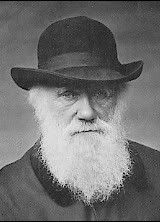
Happy Birthday today to Charles Darwin. Had he lived this long, Mr. Darwin would be 198 years old today. Although not actually the first to sneak up on the concept of species evolution (Alfred Russell Wallace should share in the distinction), Darwin's research was more progressed and he rightly deserves the larger share of credit.
Perhaps the least understood aspect of Darwin's theory is the idea of natural selection. An extremely slow process, fitness for a particular ecological niche relies on the happenstance of genetic mutation combined with sustaining that mutation over enormous lengths of time until it proves more survivable than other traits. If you're interested in understanding what all the fuss is about, allow me to recommend The Blind Watchmaker, by Richard Dawkins. Exhaustive without being exhausting, a very lucid description of the theory and its wonder.
If you're less inclined toward theory and more interested in stories and practical reality (e.g., how humans are freezing the natural process and creating a sterile world of very few species), I can wholeheartedly recommend Song of the Dodo, by David Quammen. Really beautifully written, this book addresses some of the concrete consequences of human settlement of the planet. Without even really touching on climate change. An excellent book altogether.
Speaking of climate change, it should be noted that Darwin, when he set out aboard the Beagle was not seeking to prove the theory of evolution. At the time of the voyage, Darwin was a firm Christian, convinced that the wondrous complexity of nature was proof of the existence of God. ("Consider the wonder of the eye...") He could not ignore what science showed him, however, and came to regard Christian dogma concerning the creation of the world as false.
This kind of revelation has been duplicated in the climate change field. A friend of mine, who has had the privilege of studying with climatologists and field biologists in Alaska, recalled for me that many of the people he met in the arctic had come fully intending to disprove the theory of Global Warming--some of them sent specifically to do so. The facts, however, were irrefutable.
When Darwin published his manuscript, he knew he'd be tarred as an apostate, an atheist. But he couldn't ignore what nature was telling him.
WHEN on board H.M.S. Beagle as naturalist, I was much struck with certain facts in the distribution of the organic beings inhabiting South America, and in the geological relations of the present to the past inhabitants of that continent. These facts, as will be seen in the latter chapters of this volume, seemed to throw some light on the origin of species—that mystery of mysteries, as it has been called by one of our greatest philosophers. ...I hope that I may be excused for entering on these personal details, as I give them to show that I have not been hasty in coming to a decision.
C.R. Darwin
UPDATE 2-14-07: A tip from Crum in the comments to read The Voyage of the Beagle, Darwin's first-hand account of that journey. See the comments for more details. Thanks!
With a hat-tip to recent commenter Abdul-Halim V., allow me to point to What Makes American Muslims Unique, a brief note by a doctoral student on alt.muslim. There's not a ton of insight in the post, but it offers a jumping-off point if you're interested in beginning to understand the Islamic part of our population.
Like everything else in the U.S., this is a gem with thousands of facets. The title of the article grabbed my attention because of the growing population in my city of Muslims from the north African countries--particularly the Sudan and Somalia. Somalia is of particular international concern right now because of the turmoil raging there. US involvement has been under the radar for most Americans, but certainly not for Portland's Somali population. Add it to the list of things you're keeping track of. US officials claims that terrorist cells in Somalia, while also involved in fighting the provisional government, are also busy carrying out attacks beyond Africa. Hence the US airstrikes. The Ethiopian army (traditional adversary of Somalia) has, with the provisional Somali government's blessing, been driving the islamists south, toward Kenya, along with thousands of refugees. Naturally, Kenya doesn't want them. Guess who's helping them out? If you guess U.S. Marine ground forces, you win.
The Horn of Africa. Darfur, Ethiopia, Somalia. Quickly the world rolls toward fire.
The War in Somalia is part of a long pattern, longer even than US hegemony. It takes a back seat in our superficial and distracted news media, but for all our sakes we'd best keep our eyes on it. More than one commentator and the state department have identified Somalia as the next major terrorist stronghold (though everything Gartenstein-Ross opines should be taken with a grain of salt, IMO).
From my perspective, all this should be footnote to our own importance, however. Take some responsibility for getting to know the people around you in this tent. The alt.muslim article I linked to emphasizes that
The same bickering that exists elsewhere in the Muslim world is also certainly present in the US, which serves as a microcosm of the Muslim world. But America has historically offered people to forget past enmities and forge a new identity by becoming part of the melting pot. Similarly, American Muslims have a good chance of forming a truly dynamic American Muslim identity. All the component ethnic groups, whether Muslim or non-Muslim, who have made America their home have also brought their respective strengths, weaknesses, and prejudices. But in the US, one can find such sights like Shias and Sunnis praying side by side, Indians and Pakistanis getting along (most of the time), second generation desis overcoming the prejudices of their parents against African Americans, and so on.
Melting pot has been dropped in favor of 'salad bowl' by some. But the fact remains that we are in this Ark together.
Take a look around alt.muslim. I think you'll find good cause for hope there. Now find it in yourself.
A man was was walking across a bridge one day, and he saw another man standing on the edge, about to jump off and commit suicide. He immediately ran over and said "Stop! Don't do it!" "Why shouldn't I?" he said. The man said, "Well, there's so much to live for!" "Like what?" "Well ... are you religious or atheist?" "Religious." "Me too! Are you Muslim, Christian or Jewish?" "Muslim." "Me too! Sunni or Shiite?" "Sunni." "Me too! Hanafi, Hanbali, Shafi or Maliki?" "Hanafi." "Wow! Me too! Do you follow Sheikh Fulaan al Fullani or Sheikh Kaza Kazah?" "Sheikh Fulaan al Fullani." To which he said, "What?!! Die, heretic scum!" and pushed him off.