A bloggist of my acquaintance posted recently on Shelby Foote, the great historian and writer, whose earthly belongings went for sale recently. In that post, he linked to a wonderful CNN interview with the author. On that jump, I found a wonderful trove of interviews with other writers and personalities -- I recommend a visit.
After listening to Foote, I went through Cronkite and then Dean Brown on Ernie Pyle, and Plimpton on Hemingway and Fitzgerald. Plimpton's interview was sad -- the kid doing the questioning had all the rhythm of an average attorney doing a dry deposition. I want to like George because of his unabashed elitism, not in spite of it. But in this interview he come off sounding far too impressed with George. Snuggling up to Papa seems to fall for him into the same category as hanging around the Lions or getting in the ring with the champ, when it's really just hero worship.
Not all interviewees were as compelling as Foote, but then not all tackled anything so delicate as an attempt to explain the benefits of Jim Crow to both blacks and whites, while simultaneously conceding that it was all horribly, horribly wrong -- but only in retrospect. I don't know him from the Burns series but read about 2/3 of his Civil War trilogy and one or two others. It seems you would be hard-pressed to find a black person who would say there were good aspects of the race-divided South, as the inverse of Foote's apologia is, "Well, they thought we were animals but that meant they were nice to us most of the time. So it wasn't all bad."
But as Foote would say, in fiction there is truth, but not always fact. He is appropriately complex, and the world misses him -- and many men of that era. We have great need for slow circumspection, even for its own sake and whatever its conclusions. Even if they are wrong, at least we arrive there with plenty of warning and with time to prepare.
Showing posts with label race. Show all posts
Showing posts with label race. Show all posts
Thursday, March 10, 2011


Monday, August 25, 2008
Something new, something wonderful.
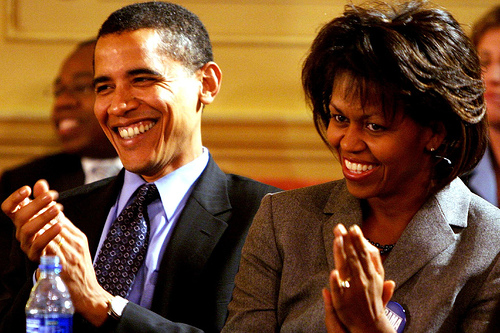
If you didn't get a chance to watch all of Michelle Obama's speech this evening, you owe it to yourself to set some time aside and see it. I think you'll agree that, with a few different forks in the road, we could easily have watched a convention on behalf of nominee Michelle Obama.
It was an address of personal politics, expressing, perhaps better than Barack himself, the deep service-oriented roots of their political philosophy. It was fitting that she shared a stage with Teddy Kennedy, in this way: Kennedy was born wealthy and could quite easily have turned his energy toward creating even greater personal wealth. Instead he devoted his personal fortune and his political career to serving the cause of those without a voice, without wealth.
The Obamas each came from modest means and each secured a ticket to the big leagues. A law degree from Harvard is a license to earn. But both Obamas have, with that opportunity, also willingly accepted an obligation to serve.
More even than that, however, this was a watershed moment for our nation. If we are lucky, we may be blessed one day to realize just how significant it was. A black woman stood before half of political America and told them in no uncertain terms of her humanity, her intelligence and her love for a black man who they should by now be compelled to elect as leader of the free world.
I'm very, very glad that I was able to see that.
Video below in two parts; runs just over 18 minutes total.
Monday, June 9, 2008
Race is No Longer an Issue
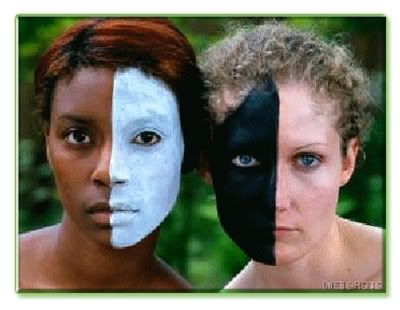
At least in Delray Beach, Florida. You see, they've finally agreed to integrate their Little League! Hey, congratulations for taking the big step, Delray. Let us know how it works out for you.
The history of Delray little league is so perfectly disingenuous it'd be funny if it wasn't so sad. You've likely heard of district "gerrymandering." Theoretically, gerrymandering can be used to increase the representation of minority groups. In practice, however, it is typically used to ensure power remains in the hands of the majority, whether that majority be white or, say, Republican (and usually both). Tom Delay (R-Texas) earned his pitchfork in part by his elaborate and corrupt efforts to redistrict the state of Texas and create a permanent Republican majority with an added bonus of nearly comprehensive black disenfranchisement. *
As grim as this is on the national stage, it's just sad and small when it plays out over something like Little League. Little League International will not grant charters to organizations that discriminate. So the Delray (rhymes with "DeLay") Little League established in 1953 was gerrymandered to exclude those neighborhoods that were primarily black. Perfect.
Fifty-five years later, they're finally doing something about it.

* This bit of political theater actually has some fascinating footnotes (hence this footnote). On the eve of the vote, 52 Democratic members of the Texas House secretly boarded buses for Ardmore, Oklahoma. Powerless to stop Delay's plan and fighting for time, the Dems knew that their only recourse was to deny the Republicans a "quorum" for the vote. They also knew they'd be compelled to attend if they were in town. So, as a group, the "Killer-Ds," as the media dubbed them, lit out for the territory in the middle of the night. Undeterred, Delay used your federal tax dollars to track them down and attempt to force them back to Austin. Pulling the strings from D.C., Delay was hell-bent on building an impervious Texas fortress GOP. The corruption and misappropriations of government funds ultimately found him out. Today is the last day Tom Delay will go to work in the United States Congress. For more information, especially regarding the misuse of the State power to police, see here. Typical of GOP Hubris and stupidity, Delay and his cronies were so confident of success that they never imagined what might happen if Democrats ever regained control: the same desert island to which he tried to banish them would be reserved for him.
The history of Delray little league is so perfectly disingenuous it'd be funny if it wasn't so sad. You've likely heard of district "gerrymandering." Theoretically, gerrymandering can be used to increase the representation of minority groups. In practice, however, it is typically used to ensure power remains in the hands of the majority, whether that majority be white or, say, Republican (and usually both). Tom Delay (R-Texas) earned his pitchfork in part by his elaborate and corrupt efforts to redistrict the state of Texas and create a permanent Republican majority with an added bonus of nearly comprehensive black disenfranchisement. *
As grim as this is on the national stage, it's just sad and small when it plays out over something like Little League. Little League International will not grant charters to organizations that discriminate. So the Delray (rhymes with "DeLay") Little League established in 1953 was gerrymandered to exclude those neighborhoods that were primarily black. Perfect.
Fifty-five years later, they're finally doing something about it.
"I was very skeptical at first," said Shelly Ann Brewster, whose son, Lamar, plays for the Sand Gnats. "I didn't know where my kid was going to have to go and who he was going to have to play with."Well, gosh, Shelley Ann. That would be little black kids Lamar will have to play with. He might even have to go to their neighborhoods to do it, from time to time.
Tim Stebbins, a director of Delray National, described it this way: "One builds up all these fears, and then you get to the thing and say, 'Why didn't we do this two centuries ago?'"What can I say? Res Ipsa Loquitor.
* This bit of political theater actually has some fascinating footnotes (hence this footnote). On the eve of the vote, 52 Democratic members of the Texas House secretly boarded buses for Ardmore, Oklahoma. Powerless to stop Delay's plan and fighting for time, the Dems knew that their only recourse was to deny the Republicans a "quorum" for the vote. They also knew they'd be compelled to attend if they were in town. So, as a group, the "Killer-Ds," as the media dubbed them, lit out for the territory in the middle of the night. Undeterred, Delay used your federal tax dollars to track them down and attempt to force them back to Austin. Pulling the strings from D.C., Delay was hell-bent on building an impervious Texas fortress GOP. The corruption and misappropriations of government funds ultimately found him out. Today is the last day Tom Delay will go to work in the United States Congress. For more information, especially regarding the misuse of the State power to police, see here. Typical of GOP Hubris and stupidity, Delay and his cronies were so confident of success that they never imagined what might happen if Democrats ever regained control: the same desert island to which he tried to banish them would be reserved for him.
Saturday, May 31, 2008
In Memory of...
Introductory rambling: So much to write about these days, what with the rules committee hearing going on in DC (moot in any case), the war, the Democratic Convention in Augusta, the Celtics, international disasters--it's all been on my mind to comment, disparage or celebrate. Instead, I'm going to write about Memorial Day.
I've been thinking about this since I went to Portland's parade on Monday, and links sent by Petrie have kept it in the front of my mind. Last night I had pizza and beer with my city councilor and we chatted about it as well. Time to write.
Portland's Memorial Day Parade was pathetic. Embarrassing, actually, on several levels. It was thinly attended. The delegations were small. The community was not represented. The American Legion and VFW were predictably bitter. I was pissed.
I shot off a text message to the three city councilors who I know, and they all had the same general response. It is the VFW and the American Legion who organize the parade, and they only talk to each other. I don't mind beefing with those guys--you have to involve the community. Here are my thoughts, in no particular order:
In Memory of Memorial Day
Reverend Shuttlesworth was speaking about slavery when he said that. I feel the quote is appropriate, nevertheless. Like slavery, our American wars -- and war wounded and war dead -- are self-inflicted strokes. Bear with me while I explain what I mean.If you don't tell it like it was, it can never be as it ought to be.
-- Rev. Fred Shuttlesworth

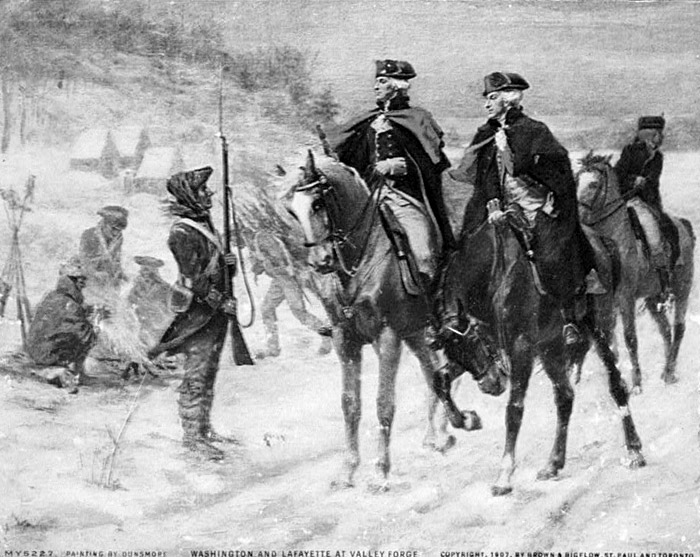
No matter how obvious the need, ultimately we take it upon ourselves to war. The Revolution was a choice -- we decided that bloodshed was necessary. We severed ourselves from England to become the cutting for a new flower.
Even the most obvious wars -- World War I and II, the war with Afghanistan -- reflect a policy choice that sends Americans to kill and die. The rightness of a choice is debatable; that it was a choice is not.Washington and Lafayette
Joshua Chamberlain
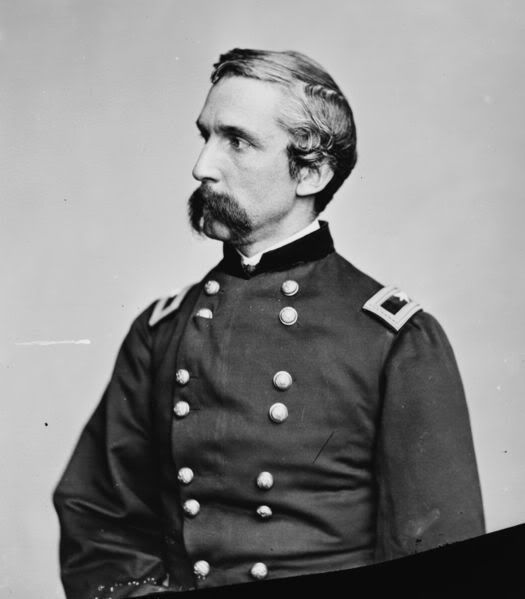
It is also appropriate to tie the remembrance of slavery to Memorial Day because we have, in part, freedmen to thank for it.
During the Civil War, a racetrack near Charleston was converted into a military prison for captured Union soldiers. At least 257 of those men died from exposure and disease and were buried in a mass grave. In April of 1865, two dozen or so black men dug up the grave and properly reinterred the bodies of those dead Union men in the racetrack's infield. (Who cares to imagine that gruesome task?) A fence was built around the new cemetery, whitewashed, with an archway entrance inscribed, "To the Martyrs of the Racecourse." Then, on May 1st, Something remarkable occurred:
At 9 am on May 1, the procession stepped off led by three thousand black schoolchildren carrying arm loads of roses and singing "John Brown's Body." The children were followed by several hundred black women with baskets of flowers, wreaths and crosses.(Of course, the "official" Memorial Day wasn't established until 1868, when General John Logan, Commander of the Grand Army of the Republic, signed General Order No.11.)Then came black men marching in cadence, followed by contingents of Union infantry and other black and white citizens. As many as possible gathering in the cemetery enclosure; a childrens' choir sang "We'll Rally around the Flag," the "Star-Spangled Banner," and several spirituals before several black ministers read from scripture. No record survives of which biblical passages rung out in the warm spring air, but the spirit of Leviticus 25 was surely present at those burial rites: "for it is the jubilee; it shall be holy unto you ... in the year of this jubilee he shall return every man unto his own possession."
Following the solemn dedication the crowd dispersed into the infield and did what many of us do on Memorial Day: they enjoyed picnics, listened to speeches, and watched soldiers drill. Among the full brigade of Union infantry participating was the famous 54th Massachusetts and the 34th and 104th U.S. Colored Troops, who performed a special double-columned march around the gravesite. The war was over, and Decoration Day had been founded by African Americans in a ritual of remembrance and consecration.

Finally, the act of warring ploughs deep furrows in the mind. This is not to say that years on the battlefield are one-to-one in ratio to lifetimes of slavery. It is simply to note a consonance of mental rupture.
The "double consciousness" of WEB DuBois that many black Americans live in is not unlike the double consciousness of the soldier in autumn (even if it's still his or her spring).
 Whether lately returned from the war in Iraq or guarding the memory of the last "Great War;" whether nursing a beer at the VFW or quietly living with all the horror clamped down and only the fierce memories of heightened life and comradeship allowed to percolate to the surface; whether having found an equipoise (no matter how delicate) or desperately seeking to replicate, or escape from, the high of combat; whether a soldier, a marine, an airman or a sailor, that person is always searching for a place in civil society, and for the right tone of life in the place to which that service was rendered. To paraphrase DuBois, it is a struggle to be both a warrior and a civilian, both from within and from without.
  For myself, I struggle to harmonize my love of this nation with my sickness at the things we've been up to lately. My heart is broken; I long to be as proud of this nation as I am of many of her soldiers. And once we open this window into the contradictions of American citizenship, we can see it is a fun-house mirror-maze of double images. Like all mazes, though, there is the promise of finding a way out.
Memorial Day is a day to acknowledge the wounds on the body politic. To see, no matter our own position on any of the litany of conflicts in which our nation has engaged, that those wars have torn a hole in the civic fabric. It is a day for us to acknowledge our national wounds: psychic, moral, bodily -- even political. To look at that place where we have gashed ourselves in the throes of this experiment and say, "Here have we hurt, and yet, we are."
The fulcrum of "and yet" is why the parade. Early Memorial Day parades had two distinct parts: A procession to the cemetery on the edge of town and a recession from there to the town center. On the way to the cemetery, the marchers would be solemn. The band would play a hymn-like tune. The procession would arrive for a dedication and "Taps" -- a Civil War bugle call that once simply signaled the end of the day -- would be played. But on the return to the center of the town, the march becomes a celebration--not of victory, but of enduring hope.
Here have we hurt, and yet, we are.
Hope in this setting is so important. It is the feeling that we are still moving forward, together. A belief that the dream is still viable, still worthwhile. That whatever we do, we do together. That however bitterly we tear at one another, we share a nation and, at root, hold the same essential liberties sacred. That above all we might one day come to a place where discord is marginal, not central, to civic life.
Memorial Day, therefore, is about our community. In order to celebrate it, we should be drawing the community in. This isn't a celebration for the VFW and the Legion (an organization that I am ambivalent about to say the least), though they may be its organizers. Rather than organizing the Day and then expecting the public to come, we need to be reaching out the public and inviting them to participate, not just watch.
I "marched" in my first Memorial Day parade wearing a T-Ball uniform and sneakers. And I marched in every one after that until I graduated from High School. I marched as a Cub Scout, a Boy Scout and a member of the High School Band. In our parade we had: the 4-H; the Pony Club; every kid who played in the town's recreational T-ball, Softball, Jr. Little League and Little League; Mr. Criz and his clydesdales; the community garden group; the Lions Club; the Kiwanis; the High School Band; the Combined Jr. High Bands; the Bethany Community School band, pounding away on their drums and glockenspiels; the Library; the Bethany VFD; the Staties; the Governor's Horse Guard (stabled in town); the EMT's; the Downs brothers, dressed as clowns to pick up after the horses; the Brownies and Girl Scouts; the Bethany Wanderers (hiking group); the Bethany Conservation Commission (us. w/ the Wanderers); the Shriners; at least half a dozen antique automobiles. And that's just off the top of my head.
The parade route was 1.7 miles long. Yes, it was. I mapped it on Google maps. It included two right-wheels (three if you count the start): one onto Peck Road (a steep uphill), and one just past the reviewing stand (yes, there was a reviewing stand) into the parking lot of the Town Hall. Gordon Carrington was always on the reviewing stand (1st Selectman for about 80 years), and the kid who played "Taps" during the laying of the wreath hid out on the side stairs of the Town Hall and always seemed to crack a note or two. Then, after the wreath, we'd all troop back down Peck Road to the Fire Station and get hotdogs from Mr. DiMayo, who grilled squinting into the smoke with a little bit of dip in his lip, and we'd play on the fire trucks.
In 1990, the year before I graduated high school and left town, the population of Bethany was 4,670. The population of Portland is 64,000. The Portland Parade could have chased itself around the monument in Monument Square, around the base of Columbia, "To Her Sons Who Died for the Union." There were few people on the street.
There are a couple of reasons, I think. One is that it has become a three-day holiday weekend. The other is that no one has asked them, or their kids, to participate. Where were the neighborhood groups? Munjoy Hill, Bayside, East Bayside, Western Promenade and the West End all have neighborhood groups. What about the Friends of Deering Oaks Park? What about the historical society/Portland Monuments? Portland Parks and Rec? Friends of Evergreen Cemetery? Portland Trails? A Company of Girls Theater Group? Were the Kiwanis there? What about the Portland Boxing Club? What about our new immigrant communities--don't you think we can do a better job with that? Don't they have something to celebrate here? And shouldn't we, a nation of immigrants, be equally excited to celebrate them? (I guarangoddamtee you the Legion didn't reach out to them.) What about PATHS and Casco Bay HS? I bet those PATHS guys could make up a ripping float.
My point is, this should be a community event. It should be a moment to look around and see who we are, to come together to share sorrow, to honor sacrifice and loss, and then to celebrate ourselves for moving this democracy forward, one day at a time.
We're in an historic moment where the only sacrifice we've been called to make as a community is to support the troops by shopping. But Memorial Day is a chance to stitch the fabric of our Community (capitalized on purpose) a little tighter together.
We need to take that chance.
KJG 1919-2001

If you're a black American...
...how long have you waited for this day?
It's stirring to me, and I was born well into the power structure, and have wormed my way even closer since.

It's stirring to me, and I was born well into the power structure, and have wormed my way even closer since.
Friday, April 4, 2008
April 4
The closer to the mountaintop we get, the heavier and more subtle the burden becomes.
All we can do is to keep climbing.

All we can do is to keep climbing.
Friday, March 9, 2007
Is it still us, or is it you and me?
Over at Corrente, ddjango posted up a few important paragraphs about race and the American left. This is a deeply important discussion to have -- one that we shouldn't stop having even though there's a terrible lot on our plates these days. To my thinking, the effectiveness of the left can only be judged by the world our efforts either create or fail to create. In Mt. Blackmore: The Future of America?, ddjango raises an exuberant call for a grand memorial to black Americans who fought (and fight) for equality in a land that claims to value it. In the middle of the piece is this paragraph:
This is the Big Issue, as far as I'm concerned, that the left in the United States has been unable to resolve since its inception. Whether you find that birth in the abolitionist movement or the labor movement or the suffrage struggle or the farm workers struggles or the civil rights era or women's liberation or the fight for gay rights, the question has always been, "How much can a member of the ruling elite, that is, white males, be counted upon to further the struggle of those outside that demographic?" Can we credibly work together? Or is there something innately limiting about a "movement" dominated by a group of people who have a choice about it?
Is there strength in separatism of some amount? The answer would seem to be an unequivocal "yes." No recent struggle for equality in American society would have begun or succeeded without the exclusive impetus of the group oppressed. Blacks, women, gays, latinos, workers. Of the major social upheavals of the last 150 years, I believe you can only make a case for abolition being dominated from the beginning by members of the majority. And my history may be fuzzy on that. (Note: I'm not saying freedmen or escaped slaves were not a part of the genesis; I'm only saying that it was a white movement in structure and majority from the beginning.)
But the question I raised (or tried to, in my roundabout, overly wordy way) in the "comments" section is, "Can we work together?" ddjango's position seems to be that no progressive effort will ever be progressive enough, so long as it is dominated by white males. Now, I'm not totally convinced that the progressive movement in America is essentially white-male. But that might be because I am one. This likely looks a lot different to anyone who isn't me. So that's why I responded and that's why I'm posting.
Surely, no matter what you think about the respective role of white-male and non-(white male) leftists, in the end we're stronger together than we are apart. Unless you believe that no matter what we do together, it will unavoidably fail to meet the requirements of a truly Liberal Society. I posed a lot of questions to ddjango in my comments (I don't know if they'll make it to post--I've been blocked by Corrente before), and I encourage you to go look at the Corrente post and think it through. But to me, the most crucial one is this:

I recently in these pages decried what I have seen as a chasm between the white male-dominated Left and other politically leftist groups. ... Perhaps advocating integration and unity is not such a good idea, because the strength and power of the non-white-male left might be forced to compromise beliefs and programs/policies that are essential to a radical revolution. Barak Obama, I venture, is an exceptionally noticeable result of such integration. Colin Powell and Condi “They Named a Damn Oil Tanker After Me” Rice are the most egregious and nauseating outcomes.
This is the Big Issue, as far as I'm concerned, that the left in the United States has been unable to resolve since its inception. Whether you find that birth in the abolitionist movement or the labor movement or the suffrage struggle or the farm workers struggles or the civil rights era or women's liberation or the fight for gay rights, the question has always been, "How much can a member of the ruling elite, that is, white males, be counted upon to further the struggle of those outside that demographic?" Can we credibly work together? Or is there something innately limiting about a "movement" dominated by a group of people who have a choice about it?
Is there strength in separatism of some amount? The answer would seem to be an unequivocal "yes." No recent struggle for equality in American society would have begun or succeeded without the exclusive impetus of the group oppressed. Blacks, women, gays, latinos, workers. Of the major social upheavals of the last 150 years, I believe you can only make a case for abolition being dominated from the beginning by members of the majority. And my history may be fuzzy on that. (Note: I'm not saying freedmen or escaped slaves were not a part of the genesis; I'm only saying that it was a white movement in structure and majority from the beginning.)
But the question I raised (or tried to, in my roundabout, overly wordy way) in the "comments" section is, "Can we work together?" ddjango's position seems to be that no progressive effort will ever be progressive enough, so long as it is dominated by white males. Now, I'm not totally convinced that the progressive movement in America is essentially white-male. But that might be because I am one. This likely looks a lot different to anyone who isn't me. So that's why I responded and that's why I'm posting.
Surely, no matter what you think about the respective role of white-male and non-(white male) leftists, in the end we're stronger together than we are apart. Unless you believe that no matter what we do together, it will unavoidably fail to meet the requirements of a truly Liberal Society. I posed a lot of questions to ddjango in my comments (I don't know if they'll make it to post--I've been blocked by Corrente before), and I encourage you to go look at the Corrente post and think it through. But to me, the most crucial one is this:
What does a more perfect future look like to you, so that a white male leftist would be incapable of advocating for it at all?So what of it, people? What are your thoughts on this, most important meta-question of the Progressive Left?
Friday, January 19, 2007
Hey LZ: Country Music [wa]s Racist. Sorry.
I just read a quick piece on ESPN.com by LZ Granderson, lamenting the fact that NASCAR and country music are consistently lambasted as "hillbilly, redneck or dumb."
Granderson feels victimized (though I'm sure would run screaming from that word) by a panoply of folks, white and black, who indulge in what LZ calls "country-bashing." And, yes, that does happen. But there are some things Granderson gets wrong.
We'll leave out the race-baiting inherent in writing an article like this just days after MLK day. Although Granderson makes some effort to admit that there's some vestigial racism in country music and NASCAR, his claim is that the vast majority of folks who love the cars 'n guitars are normal, non-racist 'Murkins. And that's likely true. But LZ is missing one important fact: What we know as country music was specifically created as an all-white alternative to the lascivious and immoral "black" music that became popular with the rise of jazz in mainstream America. In other words, it was racist on purpose, from the start.
Country Music got its start via what were called "Clear Channel Stations" -- local radio whose programming was a direct reaction to the stuff New York media was pumping out (classical, highbrow) and what was available on jazz radio (black music). The leading figure in that was a man named George Hay -- the creator of the Grand Ol' Opry.
That quote is from this really fascinating American RadioWorks article about the history of radio in America. Read it. There's a lot of interesting stuff in there. But for our purposes the most fascinating thing is the power of radio to foster a culture of white music for white people who were, plainly, afraid of and alienated by the black man and his music. That's where "country music" comes from.
And you can argue that rap has racist undertones (or overtones). But country music was there first, just as the white culture was there first. (There being the public media space.) And it was there to draw a color line. According the Mr. Hays of the world, on their side of the line are "traditional values. Faith in God, devotion to family, hard work, devotion to country." And white people (and Richard Nixon). On the other side of the line is "rhythm and blues and [the black] race. Written by people who didn't know the English language. Didn't know how to spell, didn't know how to play but could accompany himself on the gee-tar and so forth."
Hay's little show that went on the become the Grand Ol' Opry attracted a lot of fellow travellers so steeped in a kind of racial populism that they may not have even realized just how much harmful racism there was in the air. Like, perhaps, LZ Granderson's ordinary American country music fans who also like NASCAR. Mr. Granderson:
That's the tricky thing about stereotypes. Granderson's upset because, as a fan of country music he objects to being tarred with the hillbilly, redneck, racist brush. He weeps crocodile tears because even in New York, that notoriously liberal den of iniquity, he can't find a black man to say "Kenny Chesney and Kyle Bush!" when he baits them with his little test. "Intolerance!" he cries, triumphantly. Or perhaps it was, "I'm a victim!"
Unfortunately for LZ, racism in this country isn't the kind of thing most people are willing to "tolerate." Maybe all country music fans and artists aren't racist, just as all NASCAR fans and teams aren't. But the fact is that country music has a lot to live down in that department. A lot. Like its entire raison d'etre. (Oops! French! I must be some kind of cheese-eating surrender monkey.)
This started out to be just a simple rant but since I've gone this far I'll take it one more step. At the bottom of Granderson's argument is a more insidious logic. LZ thinks he's found some deep hypocrisy in finding counter-racism in what is actually the correct identification of vestigal racism in country music. Conservatives of all stripes employ this logic all the time:
"You say everyone can believe what they want!" goes the logic. "But you're against [insert exclusive belief system here], so you don't really want that! You just want people to think like you do. You're a hypocrite. Because you're a hypocrite, I can go on believing and doing whatever I like that you want me to stop."
Progressives (and liberal New Yorkers) promote a vision for a pluralistic society. The mistake Granderson (and more virulent people) make is to think that a pluralist really claims that anyone can act in any way they believe is right. WRONG.
A pluralistic society can tolerate any idea, except any idea whose central aim is the exclusion of every other idea. That's why evangelical religion comes under the progressive gun so often. Evangelicals demand the right to tell you how to live. If you don't happen to agree with them, then they'll pass a law to make your life illegal. Racists ultimately want to exclude other races.
In a progressive, pluralistic society, you can be a racist. But you can't act as a racist by attempting to exclude other races from the public sphere. You can be an evangelical christian. But you can't act to exclude gays (for example) from the public sphere. You can believe that there is no such thing as global warming. But you can't act to exclude science from the public sphere.
So why, Mr. Granderson, should a black man attempt to "tolerate" any music hatched out of a wish that he had never been born? Why should he make the effort to prove to himself that all country music fans or NASCAR fans are not dumb hillbilly rednecks? Especially when it's transparent that the France family has sold as much NASCAR to as many white folks as will buy it and are trying (and failing) to expand their audience to blacks not out of some kind of epiphany (or "growth" as Eddie Montgomery might call it), but because they want that dollar?
You can love NASCAR, Mr. Granderson, but you can't force me to like it. (Four left turns. That's a motorsport?)
As to the fact that the radio stations who peddled this all-white family values claptrap were generically called "Clear Channel Stations?" Well. Isn't that a delicious coincidence.
Granderson feels victimized (though I'm sure would run screaming from that word) by a panoply of folks, white and black, who indulge in what LZ calls "country-bashing." And, yes, that does happen. But there are some things Granderson gets wrong.
You can dress it up all you want, but make no mistake, black people calling white people who listen to country music and like NASCAR rednecks and crackers is no different than white people calling black people who listen to hip-hop and like the NBA thugs and gangsters.
But the true cat's meow are the white people who are so eager to distance themselves from the "yee-haws" on TV that they lead an internalized racist charge to paint white NASCAR fans as Confederate-flag-waving good ol' boys, in the hope of not being seen as one of them. I'm not a big proponent of this apologetic rhetoric because I believe it's based in the same stereotypical thinking that perpetuates negative perceptions of black people and hip-hop. And it's hurtful. I could be wrong, but I don't believe name-calling was part of Dr. King's dream.
We'll leave out the race-baiting inherent in writing an article like this just days after MLK day. Although Granderson makes some effort to admit that there's some vestigial racism in country music and NASCAR, his claim is that the vast majority of folks who love the cars 'n guitars are normal, non-racist 'Murkins. And that's likely true. But LZ is missing one important fact: What we know as country music was specifically created as an all-white alternative to the lascivious and immoral "black" music that became popular with the rise of jazz in mainstream America. In other words, it was racist on purpose, from the start.
Country Music got its start via what were called "Clear Channel Stations" -- local radio whose programming was a direct reaction to the stuff New York media was pumping out (classical, highbrow) and what was available on jazz radio (black music). The leading figure in that was a man named George Hay -- the creator of the Grand Ol' Opry.
Hay was trying to create, and create is the key point, a radio program and a style of music that appealed to the predominantly rural and small town audience. So he was really juxtaposing the collection of string band musicians and odd performers from Vaudeville who would show up in the early years of the Opry, against this vision of high culture being broadcast over the New York based radio station.
Hay played what you could call the Hillbilly card. He gave his popular performers names that would sound more authentically Southern and rural: The Fruit Jar Drinkers, The Gully Jumpers. Dr. Humphrey Bate, an actual Vanderbilt-trained physician, and his Augmented String Orchestra became Dr. Humphrey Bate and his Possum Hunters.
...George Hay is there presenting a manufactured rusticality that they find reassuring and comforting and fits in with really what many see as their own self identity."
And that identity was white. Kyriakoudes says Hay took a biracial musical tradition and whitewashed it, creating what would come to be called country music.
"The down home rural card was a good card to play," says sociologist Richard Peterson. "Because there was such fear of what was happening in the cities. There was so much race mixing, there was so much jazz, there was all kinds of degradation in music. Here was a way of finding a pure, unadulterated, American music that came out of an Anglo-Saxon background. They made up a whole bunch of stuff."
That quote is from this really fascinating American RadioWorks article about the history of radio in America. Read it. There's a lot of interesting stuff in there. But for our purposes the most fascinating thing is the power of radio to foster a culture of white music for white people who were, plainly, afraid of and alienated by the black man and his music. That's where "country music" comes from.
And you can argue that rap has racist undertones (or overtones). But country music was there first, just as the white culture was there first. (There being the public media space.) And it was there to draw a color line. According the Mr. Hays of the world, on their side of the line are "traditional values. Faith in God, devotion to family, hard work, devotion to country." And white people (and Richard Nixon). On the other side of the line is "rhythm and blues and [the black] race. Written by people who didn't know the English language. Didn't know how to spell, didn't know how to play but could accompany himself on the gee-tar and so forth."
Hay's little show that went on the become the Grand Ol' Opry attracted a lot of fellow travellers so steeped in a kind of racial populism that they may not have even realized just how much harmful racism there was in the air. Like, perhaps, LZ Granderson's ordinary American country music fans who also like NASCAR. Mr. Granderson:
I conducted a not-so-scientific experiment the other day. I approached about 15 people of color, of various ages, on the subways of Manhattan. I told them I was working on a column for this Web site and wanted to know the first word that came to their minds when I said the following words:
"NASCAR" and "country music."
Every single one of them said hillbilly, redneck or dumb.
Again, this wasn't a scientific poll. But still, I was hoping for a little more diversity from the answers, especially given the diversity of New York City. Back where I come from, tolerance isn't race- or age-specific. And unfortunately, it seems every year around this time that I am reminded the same is true of intolerance.
That's the tricky thing about stereotypes. Granderson's upset because, as a fan of country music he objects to being tarred with the hillbilly, redneck, racist brush. He weeps crocodile tears because even in New York, that notoriously liberal den of iniquity, he can't find a black man to say "Kenny Chesney and Kyle Bush!" when he baits them with his little test. "Intolerance!" he cries, triumphantly. Or perhaps it was, "I'm a victim!"
Unfortunately for LZ, racism in this country isn't the kind of thing most people are willing to "tolerate." Maybe all country music fans and artists aren't racist, just as all NASCAR fans and teams aren't. But the fact is that country music has a lot to live down in that department. A lot. Like its entire raison d'etre. (Oops! French! I must be some kind of cheese-eating surrender monkey.)
This started out to be just a simple rant but since I've gone this far I'll take it one more step. At the bottom of Granderson's argument is a more insidious logic. LZ thinks he's found some deep hypocrisy in finding counter-racism in what is actually the correct identification of vestigal racism in country music. Conservatives of all stripes employ this logic all the time:
"You say everyone can believe what they want!" goes the logic. "But you're against [insert exclusive belief system here], so you don't really want that! You just want people to think like you do. You're a hypocrite. Because you're a hypocrite, I can go on believing and doing whatever I like that you want me to stop."
Progressives (and liberal New Yorkers) promote a vision for a pluralistic society. The mistake Granderson (and more virulent people) make is to think that a pluralist really claims that anyone can act in any way they believe is right. WRONG.
A pluralistic society can tolerate any idea, except any idea whose central aim is the exclusion of every other idea. That's why evangelical religion comes under the progressive gun so often. Evangelicals demand the right to tell you how to live. If you don't happen to agree with them, then they'll pass a law to make your life illegal. Racists ultimately want to exclude other races.
In a progressive, pluralistic society, you can be a racist. But you can't act as a racist by attempting to exclude other races from the public sphere. You can be an evangelical christian. But you can't act to exclude gays (for example) from the public sphere. You can believe that there is no such thing as global warming. But you can't act to exclude science from the public sphere.
So why, Mr. Granderson, should a black man attempt to "tolerate" any music hatched out of a wish that he had never been born? Why should he make the effort to prove to himself that all country music fans or NASCAR fans are not dumb hillbilly rednecks? Especially when it's transparent that the France family has sold as much NASCAR to as many white folks as will buy it and are trying (and failing) to expand their audience to blacks not out of some kind of epiphany (or "growth" as Eddie Montgomery might call it), but because they want that dollar?
You can love NASCAR, Mr. Granderson, but you can't force me to like it. (Four left turns. That's a motorsport?)
As to the fact that the radio stations who peddled this all-white family values claptrap were generically called "Clear Channel Stations?" Well. Isn't that a delicious coincidence.
There's a lot of people saying that the second that I started saying, 'I think we gotta get Bush out of the presidency,' that's when Clear Channel banged my ass outta here. Then I find out that Clear Channel is such a big contributor to President Bush, and in bed with the whole Bush administration, I'm going, 'Maybe that's why I was thrown off: because I don't like the way the country is leaning too much to the religious right.'
Subscribe to:
Posts (Atom)